







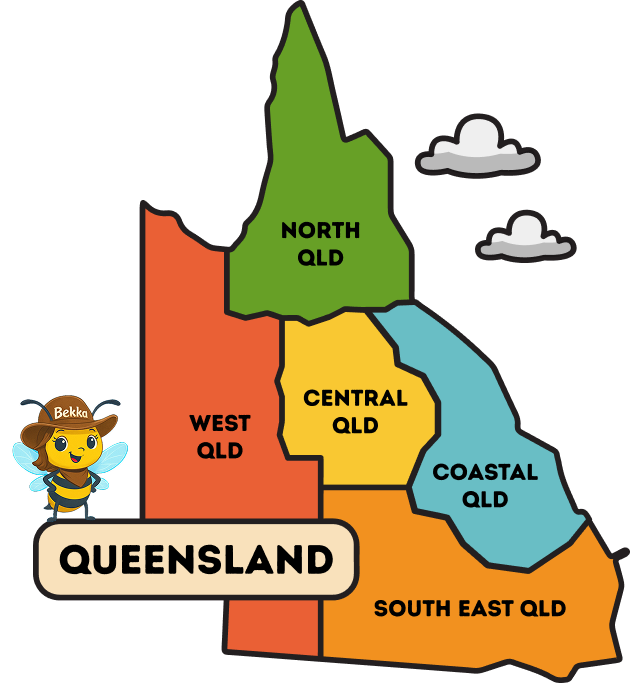
Welcome to queensland
Where the land feeds the nation


GEORGE FROM BRISSY BEE!
Look! It’s George from Brissy Bee! Let’s watch the video to see what he’s got to say.
BEES
The foundation of agriculture
The honeybee is one of the coolest little bugs you’ll ever meet!
Their bodies may be tiny and fragile, their lives may be short, and they have plenty of enemies who’d love to snack on them… but does she give up? Nope!
Every single day, the bee goes out on a mission: to slurp up nectar and gather pollen. She carries it all back home to the hive so her bee family can grow up strong.
GETTING THE BUZZ ON BEES
There is a huge variety of beneficial insects in our gardens. They help us pollinate, break down soil, and balance the local ecosystem.
Watch the video and see what Costa has to share on his experiences with these special insects in his own garden.

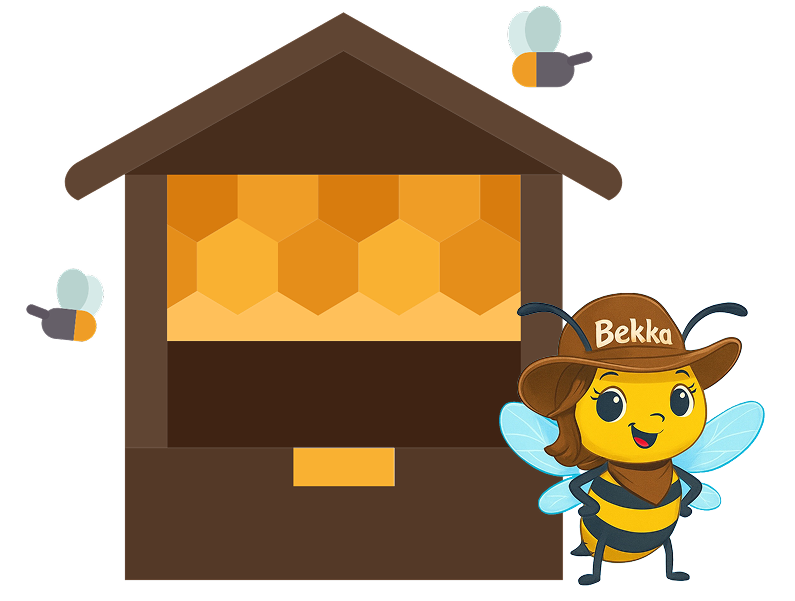
HOW BEES MAKE HONEY
From flower to honey, let’s see just how bees make the honey that you’re holding!
Scroll down to see each step in the process.
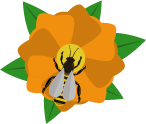
Each morning honey bees fly out in search of nectar from flowers, which they collect with their tongues and store in a special honey stomach.
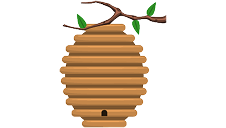
They then fly back to the hive where they pass this nectar to honey-making bees through their mouth. This is where healthy enzymes are added.
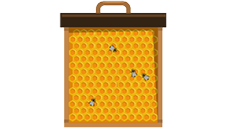
The bees inside the hive then pass the nectar mouth-to-mouth from bee to bee until the moisture level of the nectar is reduced to 20%. This is what creates honey!

The process of converting nectar into honey is called ‘ripening’. Bees constantly flap their wings to keep air flowing through the hive, to reduce moisture in the honey, and keep the colony dry.
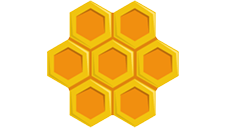
Once ripened, honey is stored in honeycomb cells and wax sealed to keep it fresh, ready for the next generation of honey bees to be born or for the winter months where food is scarce.

When ready to set out again, honeybees comb off excess pollen and clean themselves from top to toe, embarking on their visits to flowers for nectar collection once again!
Why do we need bees in our gardens?
Bees, whether honey bees or native bees, play an important role in our ecosystem and are critical to our food supply. Here’s a few reasons you might want to have them naturally buzzing their way into your garden.
Select each flip card below to reveal each fun fact. Number 1 might surprise you the most!



NICE JOB!
Congratulations! You’ve now earned your Queensland stamp!
Select the button below to continue our journey around Queensland.
Open it up, swirl it around with a spoon, maybe give it a taste on a crumpet or on top of some porridge!